If you know Chappaqua is right for you but are unsure which neighborhood fits your lifestyle, you are not alone. Buyers often weigh commute time, yard size, and school access against price and upkeep. This guide breaks down Chappaqua’s micro-neighborhoods in plain language so you can compare what you get for your budget and how each area lives day to day. By the end, you will have a short list of places to focus your search. Let’s dive in.
Chappaqua at a glance
Chappaqua is the main hamlet of the Town of New Castle in Westchester County, centered around King Street and South and North Greeley Avenue near the Metro-North Harlem Line station. The walkable core has shops, restaurants, the library, and a popular farmers market clustered near the train station and King Street. You can read more about the hamlet’s setting and history on the Chappaqua page on Wikipedia.
Chappaqua is an express stop on the Harlem Line, and community planning materials cite about a 45 to 52 minute ride to Grand Central Terminal on express trains. Saw Mill River Parkway and I-684 offer easy driving access in multiple directions. From in-town blocks, you can often walk to the station, while outlying neighborhoods are typically a 5 to 15 minute drive.
As of early 2026, recent market snapshots show a median price roughly in the 1.0 million to 1.3 million range, with tight inventory and variable days on market. Conditions change quickly, so ask for live MLS readings before you set an offer strategy.
Links for context:
How to choose your fit
Picking the right Chappaqua neighborhood often comes down to a few clear tradeoffs:
- Proximity vs space: Walkable in-town homes trade larger yards for convenience. Estate areas offer privacy and acreage with a short drive to the station.
- Maintenance vs amenities: Lower-maintenance options like Old Farm Lake include HOA fees and community amenities. Larger single-family properties offer freedom with more upkeep.
- Schools by address: Almost all of Chappaqua falls in Chappaqua Central School District, but elementary attendance zones vary by street. Always confirm by address using district resources.
- Utilities and taxes: Some areas use septic, others sewer. Property taxes and HOA costs vary widely. Confirm these numbers early in your search.
Neighborhoods explained
In-town Chappaqua (hamlet)
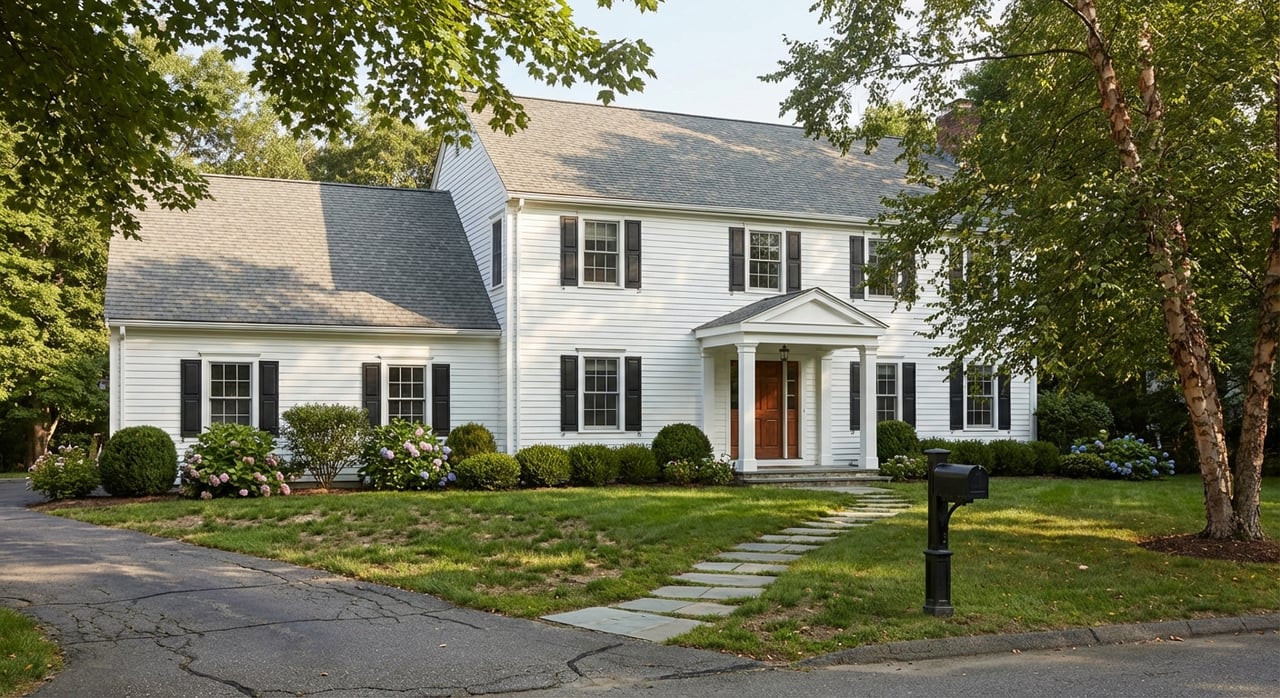
You will find classic colonials and cottages near King Street and South and North Greeley Avenue, plus a handful of newer renovations. The library, farmers market, and shops are near the station, which keeps the village lively.
At a glance:
- What you get for the money: Smaller to mid-size single-family homes near the train, commonly about $900,000 to 2 million plus depending on size and finish; a few rentals and condo options nearby.
- Commute: About a 5 to 10 minute walk for many in-town blocks, or a 1 to 4 minute drive to the station.
- Lot size: Compact town lots, often under 0.5 acre.
- Schools: Chappaqua Central School District. Confirm your specific school by address on the district page.
Old Farm Lake (townhome and condo community)
A large 1980s planned community with pool, clubhouse, tennis, gym, and playgrounds. It is popular with buyers seeking lower exterior maintenance while staying close to the hamlet and train. Learn more about the community’s design and amenities on the architect’s project page for Old Farm Lake.
At a glance:
- What you get for the money: Typically about $400,000 to $800,000 for townhomes and condos, plus HOA fees that commonly fall in the mid-hundreds per month in recent listings.
- Commute: Roughly a 3 to 7 minute drive to the station; some sections may be walkable.
- Lot size: Condominium footprints with shared green space and community amenities.
- Schools: Chappaqua Central School District. Confirm school assignment by address via the district page.
Lawrence Farms (East, South, West)
Known locally as the estate area, Lawrence Farms features architecturally diverse homes on park-like properties. You will see larger residences set back from the road with long, landscaped approaches.
At a glance:
- What you get for the money: Commonly about 1.5 million to 3 million plus, with larger custom estates trading above that band.
- Commute: About a 5 to 15 minute drive to the station and village.
- Lot size: Often 1 to several acres, with room for pools or courts depending on parcel.
- Schools: Chappaqua Central School District. Confirm address-level assignment on the district page.
Hardscrabble area (Hardscrabble Lake and Hill)
This area mixes mid-century ranches and split-levels with renovated and newer colonials. Expect varied topography and some lake-adjacent streets.
At a glance:
- What you get for the money: A wide band from about $800,000 for smaller or older homes to 2 million to 3 million for renovated or newer builds.
- Commute: Roughly a 6 to 12 minute drive to the hamlet and train.
- Lot size: Frequently 0.5 to 1.5 acres, with variations by street.
- Schools: Chappaqua Central School District. Confirm assignment by address on the district page. Note that some parcels may have septic, so verify utilities when you tour.
Seven Bridges and Quaker Road
Established residential pockets near Seven Bridges Middle School and close to Horace Greeley High School. Homes range from mid-century to larger renovated properties on roomy, private lots.
At a glance:
- What you get for the money: Commonly about 1.5 million to 3 million for full single-family homes in good condition.
- Commute: About a 6 to 12 minute drive to the hamlet and train.
- Lot size: Often 1 to 3 acres with mature trees and set-back siting.
- Schools: Chappaqua Central School District. Confirm by address on the district page.
Millwood and lake communities
Millwood is a nearby hamlet where many addresses feed into the Chappaqua schools. You will find more rural-feeling parcels and small lake associations alongside traditional single-family streets.
At a glance:
- What you get for the money: Varies widely, with recent single-family sales from the mid six figures to the low 1 million range and higher for larger or renovated homes.
- Commute: About an 8 to 15 minute drive to Chappaqua station depending on the street.
- Lot size: Frequently 1 acre plus, with some association lots near lakes.
- Schools: Many addresses are in the Chappaqua Central School District. Confirm by address on the district page.
Chappaqua Crossing and Bedford Road
The former Reader’s Digest campus has been redeveloped into a mixed-use hub with Whole Foods, Life Time Fitness, medical and office space, new apartments, and planned townhomes. It adds a newer housing option and everyday convenience close to major roads. Explore the project on the Chappaqua Crossing community page.
At a glance:
- What you get for the money: Newer rental apartments and evolving townhome product, plus quick access to retail and fitness.
- Commute: About a 5 to 10 minute drive to the hamlet and train.
- Lot size: Multifamily and townhome formats with shared outdoor areas.
- Schools: Many nearby single-family streets are in the Chappaqua Central School District. Confirm specifics by address on the district page.
Budget benchmarks: what your money buys
- Under about $800,000: Primarily Old Farm Lake condos and townhomes, plus occasional smaller single-family homes or renovation projects when available.
- About $800,000 to $1.5 million: Many Hardscrabble and Millwood single-family options, plus some smaller in-town homes and renovated ranches. Expect roughly 0.5 to 2 acre lots in this band, with condition playing a big role.
- About $1.5 million to $3 million: Lawrence Farms, Seven Bridges, and larger renovated homes closer to the hamlet. Many finished homes on 1 acre plus.
- $3 million and up: Larger custom estates on multi-acre parcels, most often in Lawrence Farms and similar estate pockets.
Inventory can be tight and pricing can move month to month. Ask for recent sold comps for your short list of streets to set realistic expectations.
Utilities, taxes, HOA and upkeep
- Sewer vs septic: Older and more rural-feeling parcels sometimes use septic. In-town blocks and planned communities such as Old Farm Lake are often on public sewer. Always verify utilities during due diligence.
- Taxes: Property tax bills vary widely by property size and improvements. Condo taxes can be in the low thousands per year, while large multi-acre estates often carry five-figure annual tax bills. Review the current tax record before you offer.
- HOA costs: Old Farm Lake and similar communities typically have HOA fees in the mid-hundreds per month in recent listings, which cover amenities and exterior maintenance per community rules. Confirm exactly what is included.
Swim, tennis, and everyday convenience
Seasonal swim and tennis clubs are a big part of local life and can influence neighborhood choice. Birchwood, Chappaqua Swim & Tennis Club, Seven Bridges Field Club, and others offer programming and social events. Membership and fees vary, so review current details with each club. For a quick overview, see this local guide to pool clubs.
For daily shopping and services, Whole Foods and Life Time Fitness anchor the Chappaqua Crossing campus, which complements the small-business scene in the hamlet.
Smart search checklist
Use this quick plan to narrow your Chappaqua search:
- Prioritize your top two must-haves: commute time, lot size, or walkability to the village.
- Set three price bands: buy-now, stretch, and aspirational. Ask for 6 to 8 recent sold comps in each band for your target streets.
- Confirm school assignment, sewer or septic, and estimated taxes for any property before you write an offer.
- Visit in-town blocks at morning rush to understand traffic, station parking, and walk times in real conditions.
If you want a curated list of streets that match your goals, reach out. A local expert can filter fast and show you only the homes that fit.
Ready to explore Chappaqua with a trusted advisor who knows the micro-neighborhoods block by block? Connect with Marcie Nolletti for a tailored search and on-the-ground insight.
FAQs
How long is the Manhattan commute from Chappaqua?
- Chappaqua is an express stop on the Harlem Line, and planning materials cite about a 45 to 52 minute ride to Grand Central Terminal on express trains.
Which Chappaqua areas are walkable to the train?
- In-town hamlet blocks near King Street and South and North Greeley Avenue offer the best walk-to-train access, while other neighborhoods are typically a short drive to the station.
What price ranges should first-time buyers expect in Chappaqua?
- Under about $800,000 often targets Old Farm Lake condos and select smaller single-family homes; many single-family options sit in the $800,000 to $1.5 million band depending on location and condition.
How do schools work in Chappaqua?
- Most addresses are in the Chappaqua Central School District with elementary zones based on your street; always confirm your school assignment by address using the district’s resources.
What should I know about septic vs sewer in Chappaqua?
- In-town blocks and planned communities commonly have public sewer, while some older or more rural parcels use septic; verify utilities and factor maintenance into your budget.