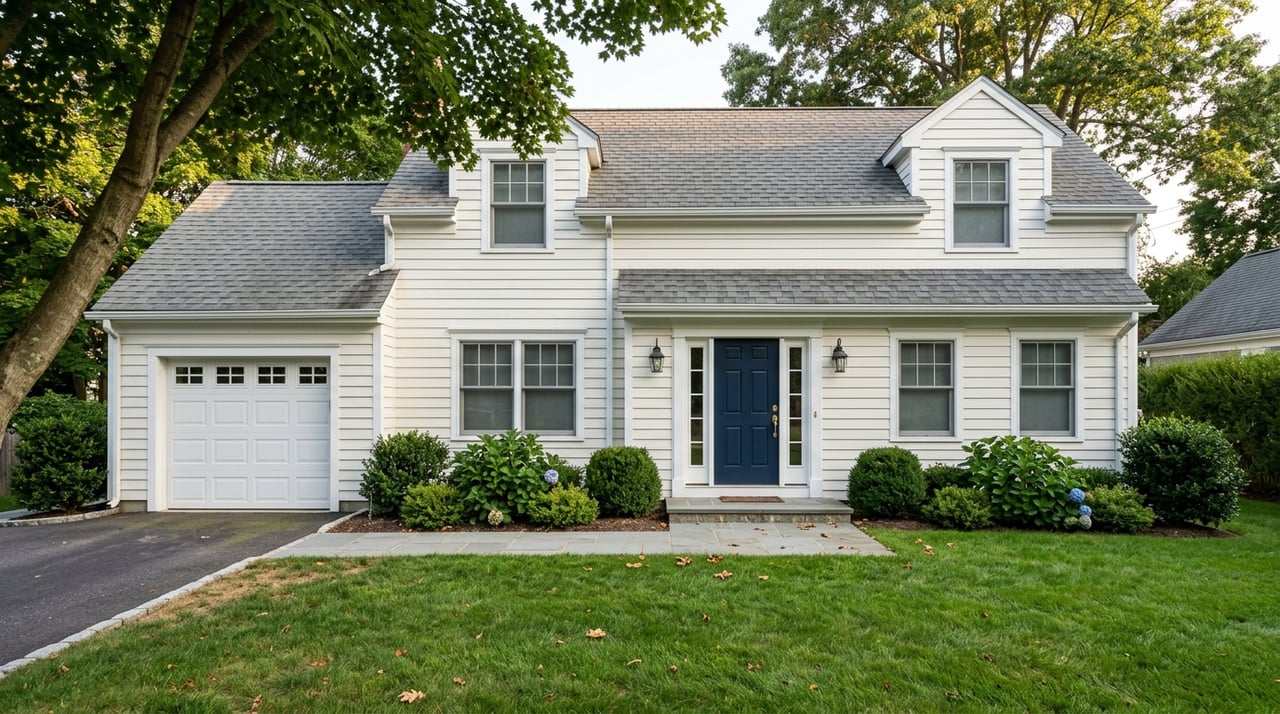
Chappaqua In-Town vs Estates: How to Choose
June 11, 2026
June 11, 2026
If you are torn between being able to walk to the train and having more room to spread out, Chappaqua gives you a real choice. Some buyers are drawn to the downtown core near the station, while others prefer the larger-lot neighborhoods that feel quieter, greener, and more tucked away. Understanding how these two lifestyles differ can help you focus your search and feel more confident about where you will be happiest. Let’s dive in.
Chappaqua is part of the Town of New Castle, a roughly 24-square-mile residential community where single-family homes make up about 35% of the land area, and another third is undeveloped or dedicated open space. That mix helps explain why some parts of town feel compact and connected, while others feel more rural and estate-like.
The clearest "in-town" area is the downtown Chappaqua core around Greeley Avenue, King Street, and the train-station area. Town materials identify this as the commercial business district and central commuter intersection, with Town Hall, the library, the Recreation Field, and the station grouped closely together.
By contrast, the outer residential areas tend to feel more wooded and private. The town also notes its long-standing presence of historic houses, barns, and stone walls throughout the community, which reinforces the more rustic character you notice once you move away from the hamlet center.
If convenience matters to you day after day, in-town Chappaqua can be very appealing. The downtown area is designed around existing infrastructure, including the commuter rail station, sewer service, and water service, which supports a more compact pattern of living.
The station area is not just a stop on your commute. It is part of a walkable civic hub, with sidewalks, stairways, and circulation paths connecting public spaces and daily-use destinations. The library sits across from the station, and Town Hall plus the Recreation Field are just nearby.
This setup can make everyday life feel more efficient. You may find it easier to combine errands, train travel, and community activities into the same part of your day instead of driving between scattered destinations.
The town's MFR-C district is the strongest official signal of what in-town Chappaqua is meant to be. It was created to encourage energy-efficient multifamily housing in and next to the business center of Chappaqua Hamlet, especially on sites served by public sewer and water and close to shopping, mass transportation, major roads, and community facilities.
Even when a home is not in a multifamily setting, the overall land-use pattern near downtown trends more compact. Compared with larger residential districts farther out, the in-town side of Chappaqua generally transitions toward smaller-lot and more service-oriented development.
For many buyers, the biggest in-town advantage is how much is close at hand. The downtown map highlights the station area as a concentrated node with public spaces, benches, greenery, and a cluster of civic uses.
The Chappaqua Library at 195 South Greeley Avenue is a major amenity anchor in this area and offers evening hours on most weekdays. The Chappaqua Performing Arts Center on Bedford Road adds another nearby destination, and the Bridge Gallery project next to the train station was created to draw people toward the murals and local merchants.
The town's economic revitalization work also centers on Downtown Chappaqua and asks residents what would encourage them to shop and spend more time there. That supports the idea that in-town living is often the more social, active, and pedestrian-oriented option.
If your priority is space, privacy, and a more wooded setting, Chappaqua's estate-style neighborhoods may be the better fit. These areas are generally shaped by one-family zoning districts with larger minimum lot sizes, giving the residential experience a more open and spread-out feel.
New Castle's zoning code sets minimum lot sizes at one-half acre in R-1/2A, one acre in R-1A, and two acres in R-2A. In practical terms, the one-acre and two-acre districts are the strongest proxy for the estate-style side of Chappaqua.
That larger-lot pattern can change how a property lives. You may have more separation from neighbors, longer driveways, more mature landscape buffers, and a stronger sense of privacy than you would typically find closer to the hamlet center.
The visual character also shifts as you move away from downtown. Town landmark materials reference roads such as Quaker Road, Roaring Brook Road, Bedford Road, and Hardscrabble Road, where older properties and historic features help create a more traditional country setting.
Combined with the town's open-space pattern and references to barns and stone walls, these neighborhoods often feel less defined by public activity and more defined by land, trees, and the home itself. For some buyers, that is exactly the appeal.
Estate-style neighborhoods often appeal to buyers who want their home to feel more like a retreat. If you value outdoor space, a quieter setting, or a more private arrival experience, the tradeoff of being farther from the downtown core may feel well worth it.
This can also be a strong match if you are specifically looking at larger single-family homes or estate properties. In Chappaqua, the zoning pattern gives you a useful clue about where that lifestyle is more likely to be found.
For many Chappaqua buyers, the choice between in-town and estate living comes down to the commute. Chappaqua Station sits on Metro-North's Harlem Line and offers accessibility features including elevators, tactile warning strips, and audiovisual passenger information systems. It also has Bee-Line bus connections and ticket machines in the overpass.
If you expect to use the train frequently, living closer to the station can simplify your routine. The downtown map identifies this area as the central commuter intersection, and the town notes that congestion is common around the station during morning and evening commute periods.
That does not mean estate neighborhoods are inconvenient. It means your commute may require more planning around drive time, parking, and timing.
Parking at the station follows a structured system. The town requires permits Monday through Friday from 6 a.m. to 6 p.m. in Lots A, B, and C, while Lot D has a limited number of non-permit meter spots. Parking is free on weekends, listed holidays, and after 6 p.m. on weekdays.
The station area also includes about 1,200 parking spaces, with roughly 600 in Lots C and D. That is a meaningful amenity, but if you plan to drive in from a larger-lot neighborhood every workday, understanding the parking setup is an important part of your decision.
Metro-North also applies peak fares on weekday trains arriving at Grand Central between 6 a.m. and 10 a.m. and departing Grand Central between 4 p.m. and 8 p.m. If your work schedule follows standard office hours, your train habits may influence whether you want to live within easier reach of the station.
The simplest way to think about this decision is convenience versus privacy. In-town Chappaqua offers closer access to the station, downtown businesses, the library, and civic spaces, all in a compact area built around sidewalks and public activity.
Estate neighborhoods offer a different kind of value. You are often trading quick walkability for more land, more visual separation, and a setting that feels quieter and more residential.
Neither option is better across the board. The right choice depends on how you want your week to feel, not just how you want your house to look.
Before you choose one side of Chappaqua over the other, it helps to think through your daily routines and long-term priorities. A few simple questions can clarify what matters most.
Your answers usually point clearly in one direction. Once you know which tradeoffs you are happy to make, your home search becomes much more focused.
If you are deciding between in-town Chappaqua and the estate-style neighborhoods, it helps to tour with a clear framework. Look at not only the house, but also the road pattern, lot size, distance to downtown, and what your normal weekday would look like from that address.
For buyers seeking convenience, the station area and downtown core may offer the strongest fit. For buyers seeking a more private, larger-lot experience, the one-acre and two-acre residential areas may feel more aligned with your goals.
A thoughtful search in Chappaqua is really about lifestyle matching. When you understand the difference between the hamlet core and the larger residential ring, you can shop with much more clarity and confidence.
If you want expert guidance as you compare Chappaqua neighborhoods, work with Marcie Nolletti for a polished, high-touch approach tailored to your lifestyle, commute, and property goals.
Marcie remains focused on the needs of her clients to deliver professional, knowledgeable, and dedicated service. Her goal is to be your Real Estate Professional for life. "Who you work with matters."
338 ROUTE 202
SOMERS NY 10589