What Living in Ridgefield Village Is Really Like
June 25, 2026
June 25, 2026
If you love the idea of a town center that still feels like a true village, Ridgefield’s historic downtown stands out right away. Living near the village center can mean easier access to daily errands, arts and culture, and the kind of streetscape the town actively works to preserve. If you are thinking about buying or selling near downtown Ridgefield, this guide will help you understand what the setting is like and how it differs from areas farther out. Let’s dive in.
Ridgefield’s historic village center is built around Main Street, which the town describes as a mile-long ridge lined with homes, museums, churches, and shops. It is not just a commercial strip. It is a civic and cultural area with a strong visual identity and a long-established village pattern.
The downtown business area is shaped in part by the town’s Village District rules. These rules primarily apply to Main Street, Bailey Avenue, and parts of Catoonah and Prospect Streets. In practical terms, that helps keep the center feeling cohesive rather than disconnected.
The town also uses historic-preservation review to maintain the area’s character. The Historic District Commission reviews exterior changes in the historic districts, and the Architectural Advisory Committee serves as the Village District consultant for exterior work and signs in the central business district. For you as a buyer or homeowner, that can be an important part of what makes the area look and feel consistent over time.
One of the biggest draws of living near Ridgefield’s village center is convenience paired with character. The downtown core is part of Connecticut’s first Cultural District, and the town describes it as a lively, walkable area that can be experienced on foot, by bike, or by car.
That matters because many of Ridgefield’s civic and cultural destinations sit within the same downtown ecosystem. The area includes Ballard Park, the Ridgefield Library, the Prospector Theater, A.C.T. of CT, the Ridgefield Playhouse, The Aldrich Contemporary Art Museum, Keeler Tavern Museum & History Center, Lounsbury House, and Books on the Common.
If you picture your ideal weekend as a mix of practical stops and fun outings, this location can support that rhythm. You may be able to combine a coffee stop, a library visit, time in the park, dinner, and an evening performance in a single trip. That kind of flow is one of the clearest lifestyle advantages of being near the center.
For many buyers, walkability is not about giving up the car. It is about having more choices in how you move through your day. Near the village center, the concentration of shops, dining, cultural venues, and public spaces can make short outings feel simpler and more enjoyable.
The town’s Cultural District materials frame downtown as a place for arts, history, performance, shopping, and dining. The Aldrich also notes that it is on Main Street and about a five-minute walk from many restaurants, coffee shops, and cafés. That gives you a sense of how closely connected many destinations are in the core.
If you work from home, have a flexible schedule, or simply enjoy being able to step out for a quick errand without making it a full drive across town, that can be a real quality-of-life benefit. Living near the center often means your routine can feel more connected to the life of the town.
Even in a walkable downtown, parking still matters. Ridgefield manages downtown parking through a mix of municipal and licensed private lots, which helps support daily visitors, shoppers, and event traffic.
The Parking Authority notes that weekday enforcement is standard. It also adds enforcement during CHIRP concerts and other large Ballard Park events. There is also a town-owned all-day free lot on Governor Street.
For you, this means downtown living or visiting often comes with a rhythm that changes a bit during major events. That is not unusual for a vibrant town center, but it is useful to understand if you value easy access at different times of day or year.
Ridgefield’s center is known for more than appearance. Town and economic development materials characterize it as a place for shopping, dining, and entertainment, with restaurants ranging from casual spots to fine dining.
The cultural side of downtown is especially notable. The Ridgefield Playhouse serves as a nonprofit performing arts center, A.C.T. of CT is a professional theater in town, and Keeler Tavern Museum & History Center interprets centuries of local and national history from its site in the heart of town.
Seasonal events also help shape the experience of living nearby. Summer CHIRP concerts in Ballard Park are part of the district’s identity, adding a recurring community rhythm to the center. If you enjoy being near public events, performances, and a regular stream of activity, that can be part of the appeal.
Ridgefield remains, at the townwide level, a largely single-family community. The town’s housing planning materials say the prevailing pattern is to keep density higher in and near villages and lower as distance from the villages increases.
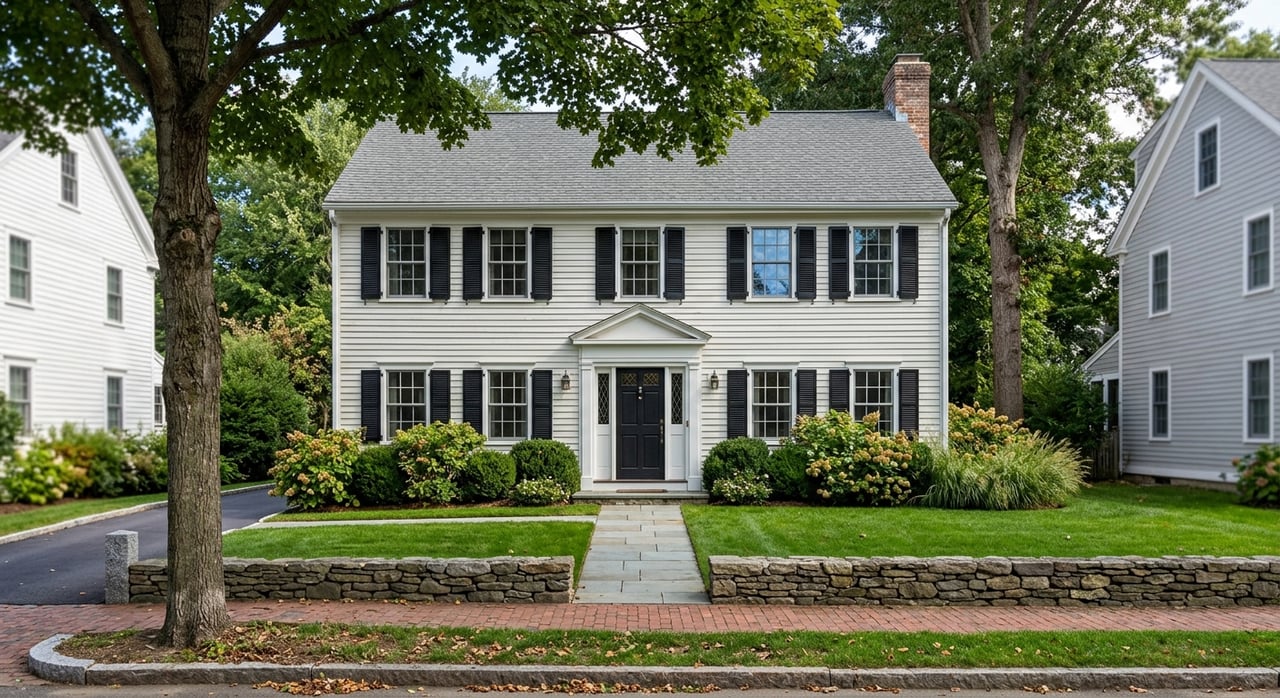
That broad pattern helps explain why homes near the village center may feel different from homes farther out. Near downtown, you are more likely to encounter older period homes, more compact lots, and streetscapes shaped by historic-preservation rules. Farther from the center, the pattern generally shifts toward lower-density residential areas with more separation from the commercial core.
This is not a block-by-block rule, but it is a useful way to think about the town. If you want easier access to downtown amenities and a more historic streetscape, the center may feel like a natural fit. If you prefer more distance from the commercial core, the outer residential areas may align better with your goals.
Historic preservation is part of what makes Ridgefield’s center visually distinctive. It is also something to understand clearly if you are considering a home in or near the historic district.
The town’s preservation guidance emphasizes visible exterior features such as porches, roofs, façades, and other street-facing details. That means changes to a property’s exterior may involve review, depending on location and the type of work planned.
For some buyers, that oversight is a positive because it helps protect the historic setting that drew them to the area in the first place. For others, it is a factor to weigh carefully if flexibility in exterior design is a top priority. Either way, it is part of the ownership experience near the village center.
If you are comparing Ridgefield with other nearby markets, it helps to understand the broader housing picture. Census QuickFacts report an owner-occupied housing unit rate of 83.5%, a median value of owner-occupied housing units of $836,200, a median gross rent of $2,026, and a median household income of $179,219.
These figures do not describe only the village center, but they do provide context for the market overall. For buyers, they help frame Ridgefield as an established, primarily owner-occupied community. For sellers, they reinforce the value of presenting a home with a clear understanding of location, setting, and lifestyle appeal.
Living near Ridgefield’s historic village center tends to appeal to buyers who value access, charm, and a strong sense of place. You may appreciate being close to cultural venues, restaurants, public spaces, and a downtown that is designed to be experienced on foot as well as by car.
At the same time, the setting comes with tradeoffs that are worth considering. Event traffic, parking rules, and preservation-related review can all be part of daily life near the center. For many buyers, those factors are balanced by the benefits of living near one of the town’s most recognizable and active areas.
If you are deciding between downtown Ridgefield and neighborhoods farther out, the key is matching the setting to your priorities. Lifestyle, lot size, housing style, and how often you want to be near the commercial core can all shape the right choice.
Whether you are searching for a home near Main Street or preparing to sell a property that benefits from this location, local guidance can help you weigh the details with confidence. To talk through Ridgefield’s neighborhoods and what buyers value most in this market, connect with Marcie Nolletti.
Marcie remains focused on the needs of her clients to deliver professional, knowledgeable, and dedicated service. Her goal is to be your Real Estate Professional for life. "Who you work with matters."
338 ROUTE 202
SOMERS NY 10589