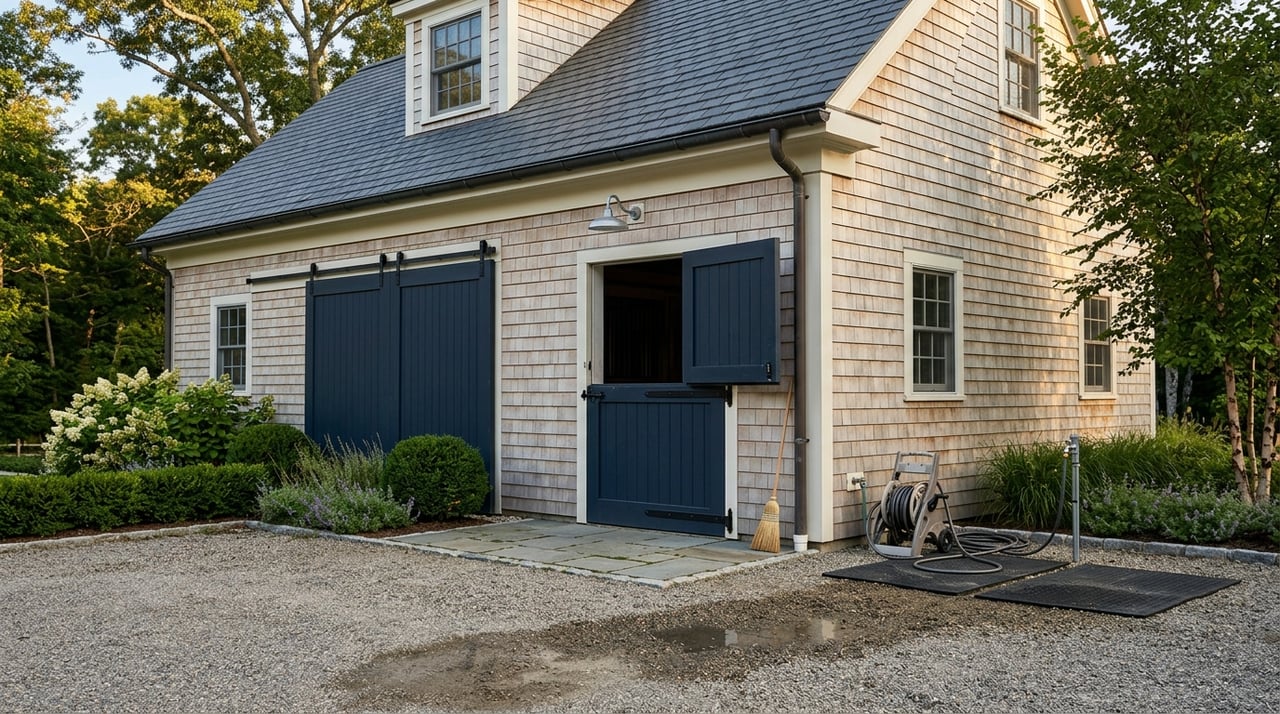
Your Guide to Somers Equestrian Properties
July 2, 2026
July 2, 2026
Looking for a horse property or multi-acre home in Somers? You are not shopping in a typical suburban market. In Somers, acreage, land-use rules, and site conditions can matter just as much as the house itself. If you want to understand what makes an equestrian or estate property work here, this guide will help you look at the right details before you buy or sell. Let’s dive in.
Somers has a long-standing planning framework that helps preserve a lower-density, estate-style feel. The Town of Somers Planning Department notes that the town adopted its first zoning ordinance in 1934 to prevent scattered commercial and high-density residential development. Today, the department still reviews subdivision and site-plan applications and oversees issues like stormwater, steep slopes, wetlands, watercourses, tree preservation, and environmental review.
That matters because many properties in Somers are shaped by the land as much as by the floor plan. If you are considering an estate parcel, horse property, or home with expansion potential, the review process around the site can be a major part of the decision. In other words, Somers often functions more like an acreage market than a standard subdivision market.
Somers zoning includes several residential districts with different minimum lot areas. The town code lists minimum lot sizes of 10,000 square feet in R10, 40,000 square feet in R40, 80,000 square feet in R80, and 120,000 square feet in R120.
Those thresholds help explain why buyers often see a wide range of property types in town. Some homes sit on more conventional residential lots, while others offer the scale needed for estate-style use, outbuildings, or horse-related features. If you are comparing properties, lot size is one of the first filters to apply.
In Somers, horse use is not a one-size-fits-all category. The town code allows horses and ponies for personal pleasure in any zone, but that allowance is tied to agricultural practices and lot-size rules.
For personal pleasure use, the code allows:
This means a property may feel horse-friendly at first glance but still fall short once you match the acreage to your intended use. A beautiful barn or fenced area does not automatically mean the property supports the number of horses you have in mind.
One of the most important distinctions in Somers is whether the use is personal or commercial. If the property is for breeding, boarding, or instruction, the town treats that as a commercial horse use that may be allowed only by special use permit.
The code also sets a higher bar for commercial use. The premises must be at least 10 acres, horse buildings must be at least 200 feet from all property lines, and any caretaker or watchman quarters must be integrated into the horse building and limited to three rooms, including a kitchen.
For personal pleasure horse use, building placement is still tightly defined. Horse buildings must be at least 100 feet from all property lines, and corrals must be at least 10 feet from property lines.
For buyers, this is a key takeaway: not every property with acreage can support every equestrian goal. The intended use drives the due diligence.
When you evaluate a Somers equestrian or acreage property, the house is only part of the picture. A functional horse property usually depends on a full site plan that works well day to day.
Extension guidance on horse-farm design highlights several core elements:
That broader view is especially important in Somers because local code also treats manure handling as a land-use issue, and the town separately regulates waste discharge to watercourses and wetlands. A property may be attractive and spacious, but if the site layout does not support drainage, cleanup, or compliant storage, ownership can become more complicated.
Acreage alone does not tell you how usable the land will be. Extension guidance notes that 1 to 2 acres of well-managed pasture can support one mature horse during the grazing season when rotation is used. It also emphasizes planning exercise paddocks for drainage and cleanup.
That means two properties with the same acreage may perform very differently. One may offer open, practical turnout areas, while another may have terrain, wet areas, or layout issues that limit everyday use. In Somers, buyers should pay close attention to how the land actually functions on the ground.
In a community like Somers, site conditions can affect both usability and future plans. Planning resources from the town point buyers toward stormwater, site-plan approval, steep-slope protection, wetland and watercourse protection, tree preservation, and environmental review forms.
These factors are especially relevant if you may want to add a barn, create an arena, extend a driveway, clear land, or explore subdivision potential. Even when a parcel looks large enough, environmental and planning constraints can shape what is practical. That is why acreage value is often tied to both size and feasibility.
Somers appeals to many lifestyle buyers because of its open-space character. The town’s comprehensive plan identifies former railroad rights-of-way as some of its best open-space and trail resources, including the Putnam Division trail through Koegel Park and the Mahopac Branch trail from Goldens Bridge to the Carmel border.
Westchester County also describes its broader trail system as more than 250 miles of off-road bike and walking trails and on-road bicycle routes. The county notes that the North and South County Trailways, which run along the former Putnam Railroad right-of-way, are used by runners, walkers, cyclists, and in-line skaters.
Somers is also home to Muscoot Farm, a 777-acre interpretive farm in Westchester County. Together, these features reinforce the town’s agricultural and open-space identity.
If trail access is part of your property wish list, it is smart to confirm the permitted use of any specific trail segment. County descriptions focus much of the network on biking and walking infrastructure, so you should not assume a nearby trail is suitable for horseback riding.
This is a small detail that can make a big difference in daily enjoyment. A property may feel close to open space, but your actual use options can vary based on the specific trail rules and route connections.
If you are shopping for an equestrian or acreage property in Somers, start with the basics before falling in love with finishes or views. The right questions early on can save time and help you focus on homes that truly fit your goals.
A strong first-pass checklist includes:
If you are selling a Somers acreage or equestrian property, buyers often need more than a polished listing description. They want clarity on how the property works, what the land supports, and how improvements fit within local rules.
That means the most compelling marketing often explains the full property story. Acreage, layout, barn placement, turnout areas, fencing, and site utility can all help buyers understand value. For specialty properties, strong presentation is about translating complexity into confidence.
Somers equestrian and acreage properties reward careful analysis. The best opportunities often come from understanding not just the residence, but also the zoning, land features, and practical setup that support the lifestyle you want.
Whether you are buying your first horse property, moving up to a larger estate parcel, or preparing a specialty property for the market, informed guidance can make the process smoother. If you want expert help evaluating or positioning a Somers acreage home, connect with Marcie Nolletti for personalized, concierge-level guidance.
Marcie remains focused on the needs of her clients to deliver professional, knowledgeable, and dedicated service. Her goal is to be your Real Estate Professional for life. "Who you work with matters."
338 ROUTE 202
SOMERS NY 10589