How Waccabuc Community Traditions Shape Hamlet Life
September 17, 2026
September 17, 2026
The building at 2 Post Office Road doesn't look like much. It keeps banker's hours on weekdays, opens for a half day on Saturday, and closes entirely on Sunday. It processes an estimated 1,545 packages a year, which works out to roughly four a day. There is no coffee shop next to it, no hardware store across the street, no strip of storefronts to browse while you wait for a package slip. In a hamlet with 851 year-round residents, that small brick building on Post Office Road is doing a job that in most towns belongs to a Main Street.
Waccabuc has no commercial center, and that helps explain the rest of the hamlet's calendar.
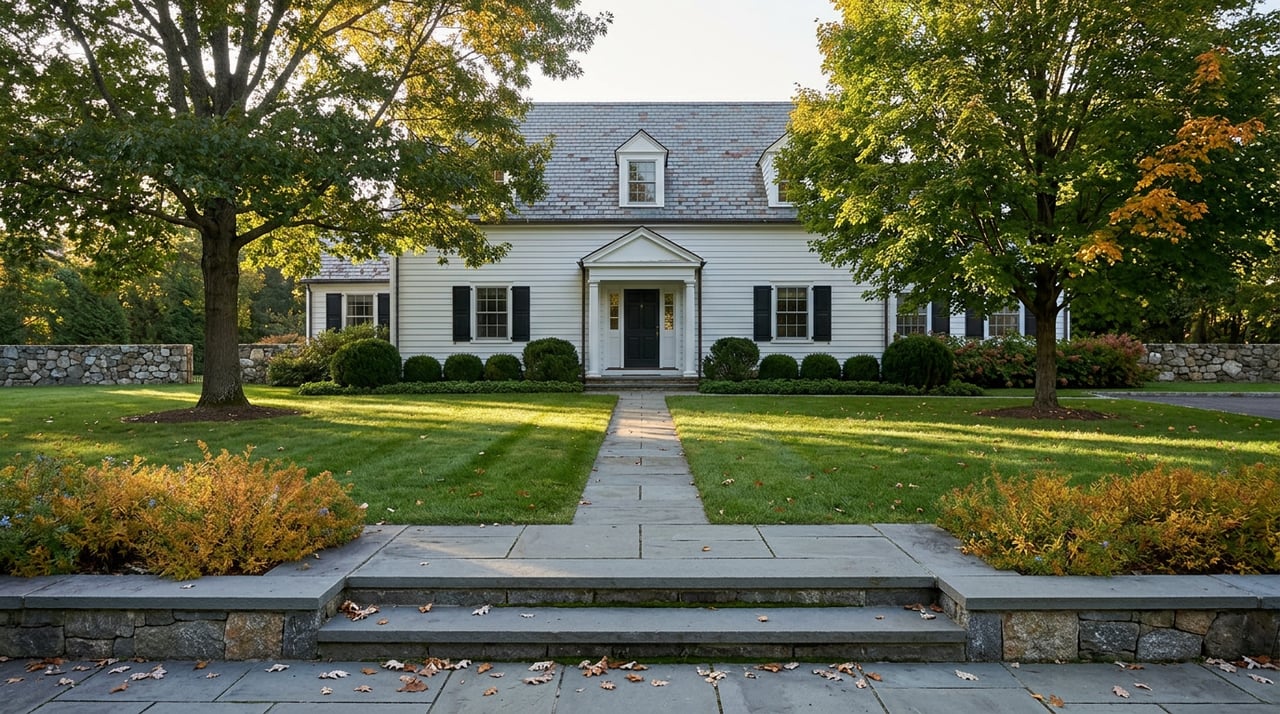
Waccabuc is roughly 3.5 square miles inside the Town of Lewisboro, and Wikipedia says that for most of that footprint, you can't put a house on less than two acres. On most streets the minimum climbs to four, with the Hunt Farm development standing as the one carved-out exception. The Mead family, who settled the land in 1776 and held onto it as a private retreat well into the 1900s, reportedly wanted their getaway free of "tramps, bars, or malaria." An inn and a golf club got added by the late 1800s, but the commercial buildout that reshaped so much of northern Westchester never touched Waccabuc's core. Waccabuc never developed a downtown, and its zoning pattern left little room for one.
That leaves the post office carrying weight a retail strip usually would. It's worth noticing that the zip code the post office anchors, 10597, actually covers about 968 residents, more than the 851 people who technically live inside Waccabuc's hamlet lines. The zip code is bigger than the place. For a lot of people who tell others they live in Waccabuc, the post office and its mailing address are the thing that makes that true, more than any specific property line does.
Since there's no commercial center to gather around, the hamlet leans on a small number of private and volunteer organizations to do that work instead.
The largest by far is the Waccabuc Country Club, founded in 1912 on land that once held the Mead family's vacation cabins. Today it runs an 18-hole course rated at 71.3 with six Har-Tru tennis courts, four platform tennis courts, and a beach club on Lake Waccabuc with swimming, canoes, kayaks, and a children's day camp. According to the club's most recent nonprofit filing, it employs 245 people, a number worth sitting with for a second: that's close to a third of the hamlet's entire resident population working for a single private club. In a place with no other visible employer, the country club functions less like a leisure amenity and more like the hamlet's one real institution of scale.
Below that sits the Waccabuc Landowners Council, formed in 1981 specifically to maintain the character of the 10597 zip code. Its work is unglamorous and constant: entryway landscaping, road signage, care for more than 125 mature trees, and seasonal plantings along the hamlet's handful of roads. It's also the group responsible for a stretch of daffodils planted each fall at Mead Street and Route 35, which connects to something bigger happening across the whole town.
That bigger thing is Golden Roads, a fall bulb-planting tradition run by a committee of the Lewisboro Garden Club. It has drawn national press over the years, including a February 2026 feature in Better Homes and Gardens calling the town a spring destination worth planning a drive around. This year's planting day is set for November 7, 2026, the 20th anniversary of the program, with volunteers working two shifts between 8:30 a.m. and 12:30 p.m. and a rain date the following Saturday. The Waccabuc Landowners Council's Mead Street plantings are the hamlet's specific contribution to a tradition that has, by now, put tens of thousands of daffodil bulbs into roadsides across Lewisboro.
Then there's the Three Lakes Council, formed in 1970 to coordinate environmental stewardship across Lake Waccabuc, Lake Oscaleta, and Lake Rippowam, the three interconnected glacial lakes that give the area its northeast corner shape. Much of its work centers on phosphorus, specifically the kind that leaches into the water from septic systems, feeding the algae growth that lake associations spend real money fighting. The Council held its 2026 Annual Meeting and Potluck on August 15 at the Waccabuc Country Club waterfront, with the club waiving its usual fees for the gathering and a rain plan that would have moved things to the Carriage House.
Run those four organizations forward through a single year and you get something close to Waccabuc's actual social calendar, no Main Street required.
Mid-August brought the Three Lakes Council's potluck this year, held right on the club's waterfront. The Country Club's own members-only tradition, an outdoor barbecue called Dinner on the Lake, follows most years in that same early-to-mid September window, at the same beachfront property. Coming up, the Saturday nearest Halloween brings a gathering for kids and adults that, fittingly, takes place behind the post office. Then on November 7, volunteers turn out for Golden Roads and its daffodil bulbs. And on the afternoon of December 24, residents gather at Mead Memorial Chapel, a building on the National Register of Historic Places alongside The Homestead, for a Christmas Eve carol service that's open to the whole community.
One longtime WLC membership chair put the stakes plainly when writing about why any of this matters: losing the post office would risk more than convenience, since without it, the hamlet might get folded into a neighboring section of Lewisboro and lose a crucial part of its identity. That's not sentimentality. It's an accurate read of how identity actually gets built in a place with no commercial center: through the zip code, the volunteer boards, and the handful of recurring gatherings that keep several hundred households acting like a single community instead of just a cluster of large lots.
Private clubs and volunteer boards help fill the gap left by the absence of a commercial center. The Waccabuc Country Club's workforce is close to a third the size of the hamlet's population. The Landowners Council plants trees and daffodils where a business improvement district might otherwise exist. The Three Lakes Council does the unglamorous work of protecting water quality that a public works department would handle somewhere denser. Mead Memorial Chapel, protected by its historic designation, still hosts the one service that brings the whole hamlet through its doors each December.
If you already live here, none of this is new information exactly, but it's rarely laid out end to end. The post office, the golf course, the daffodils, the potluck: they're not background texture. They're the actual civic infrastructure of a hamlet whose zoning pattern left little room for a Main Street.
If you're weighing what a property near one of these institutions, or inside walking distance of that small post office, actually means for day-to-day life here, Marcie Nolletti has spent years working this exact stretch of northern Westchester and can talk through what these boundaries mean for a specific address. Let's Connect.
This article is general information, not legal, tax or financial advice. Consult a qualified professional about your situation.
Marcie remains focused on the needs of her clients to deliver professional, knowledgeable, and dedicated service. Her goal is to be your Real Estate Professional for life. "Who you work with matters."
338 ROUTE 202
SOMERS NY 10589